Eco-Friendly Traveler Checklist: Pack Light, Waste Less
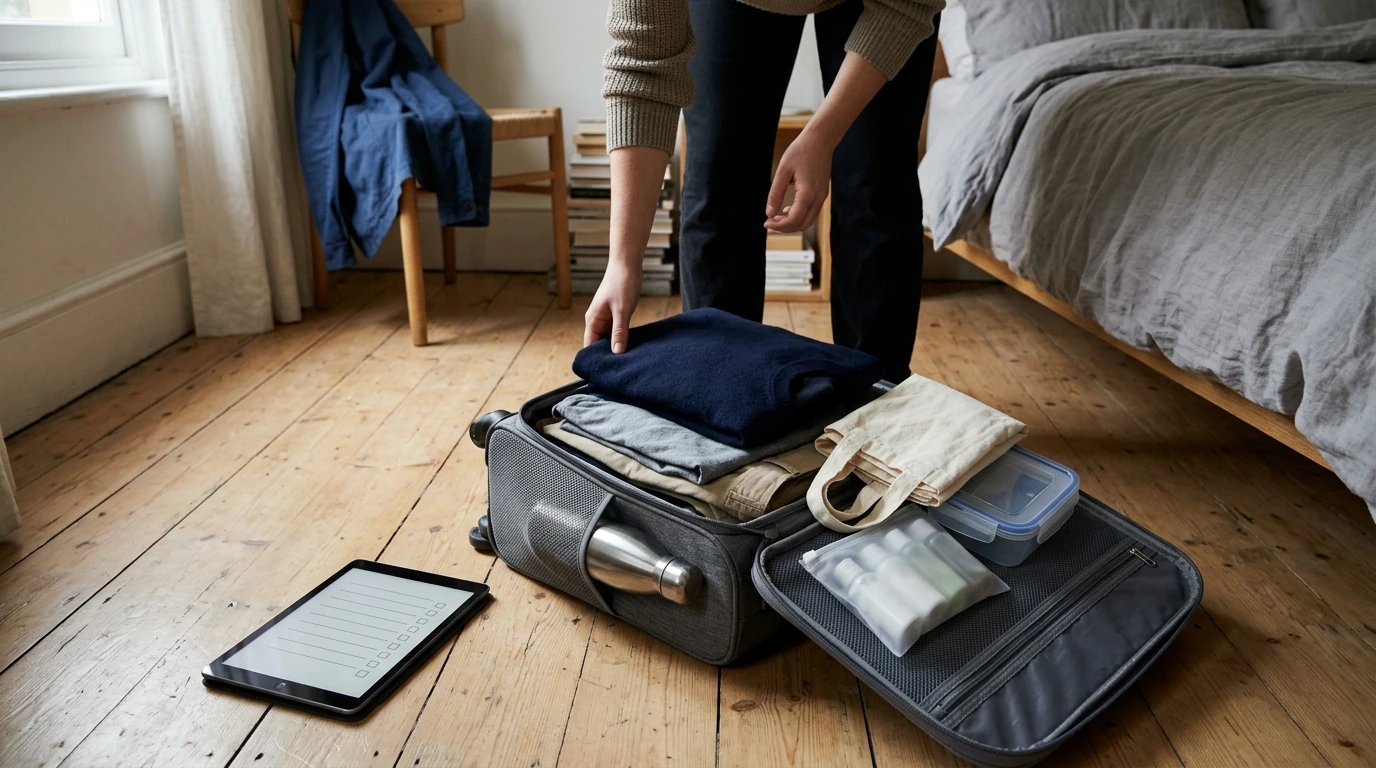
A lighter-footprint trip starts before you leave home. A few reusable essentials, a realistic packing list, and a little research about your destination can help you use less and carry less. The goal is not to promise a trip with no impact; it is to make practical choices that work for you.
Our Eco-Friendly Traveler Checklist is a digital planning companion for organizing those choices. Use it alongside the tips below to prepare for your route, accommodations, and daily routine.
Start with what you already own
Before shopping for travel gear, look through your kitchen, bathroom, and closet. You may already have a sturdy water bottle, a compact bag, or containers that can make the trip. Reusing suitable items keeps your packing plan simple and may save you money.
Then consider the conditions you will actually encounter. A weekend in a city with public refill stations calls for a different approach than a longer trip to a remote area. Check the weather, how long you will be away, and whether you will have access to safe drinking water and laundry facilities.
Leave room for flexibility. You might need a disposable item for safety, accessibility, or convenience when another option is unavailable. Making one useful change is more manageable than trying to follow a perfect set of rules.
Pack reusable essentials
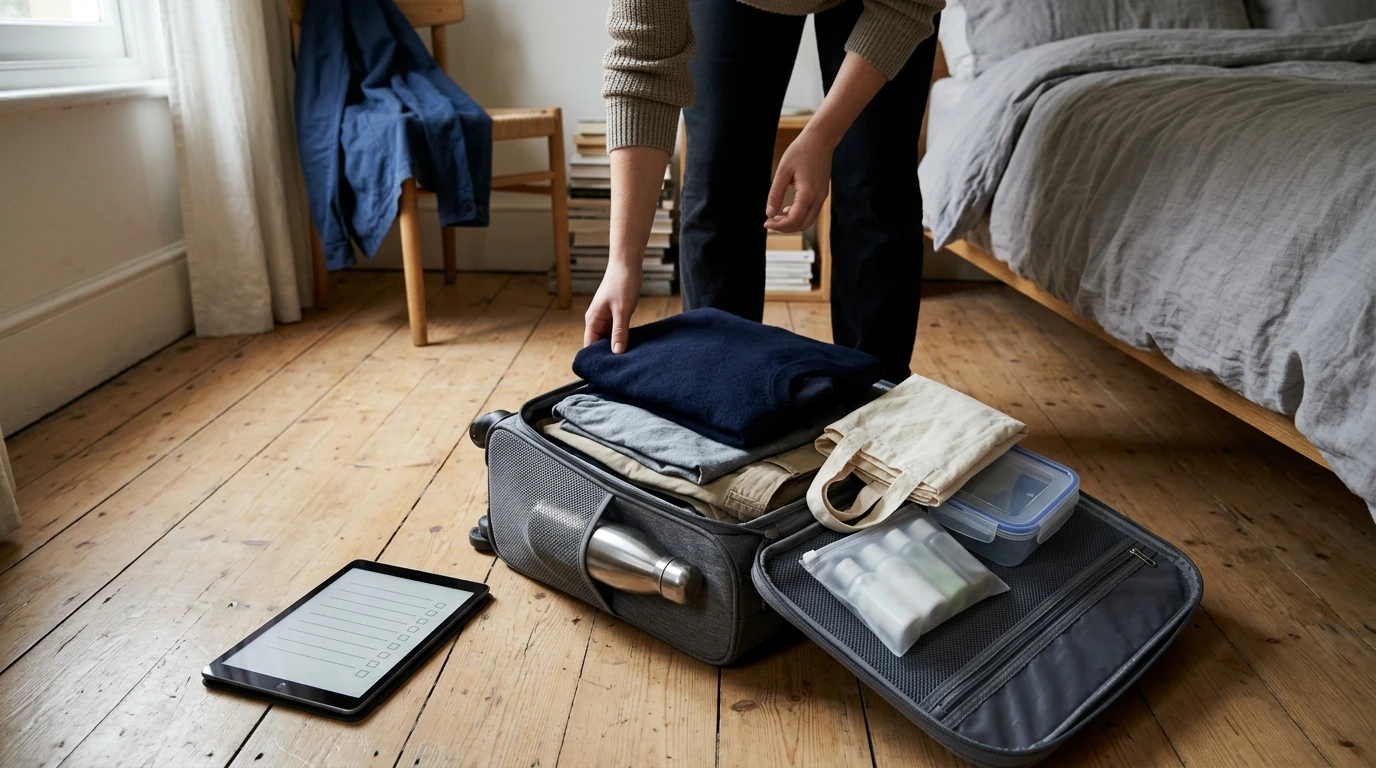
Choose a few items that fit your itinerary rather than filling your bag with things you may never use. A refillable bottle can be useful when safe drinking water is available. A reusable bag can carry groceries or laundry, while a food container may help you bring snacks or save leftovers.
| Item | Potential use | Before you pack |
|---|---|---|
| Refillable bottle | Reduce reliance on single-use bottles | Check whether safe drinking water is available |
| Reusable bag | Carry groceries, souvenirs, or laundry | Choose one you already own when possible |
| Food container | Carry snacks or leftovers | Consider available space and cleaning options |
| Refillable toiletry containers | Bring familiar products without buying travel sizes | Check carrier and airport liquid rules |
For toiletries, refill small containers from products you already use. If you are flying, consult the TSA liquids rule for US security screening and check the rules for other airports and carriers on your route. Pack containers securely to help prevent leaks.
Plan a small laundry routine
Washing a few items during your trip can reduce the number of clothes you need to carry. Check whether your accommodations have laundry facilities or whether you can wash suitable garments by hand. Choose clothing that works in several combinations, and allow enough drying time for the local climate.
Make thoughtful choices on the road
Transportation is part of your plan, too. Where they suit your route, budget, and mobility needs, consider trains or buses between stops and walking or cycling for shorter journeys. Look up schedules and local conditions before relying on an option, especially when you have a connection to make.
At your destination, consider locally owned restaurants, shops, and services where possible. Follow local guidance in protected areas, stay on designated paths, and give wildlife space. The broader approach described by UN Tourism’s sustainable development guidance includes environmental, social, and economic considerations.
Waste systems also vary. Carry a small bag for wrappers or other trash when bins are unavailable, and sort recycling according to local rules rather than assuming they match those at home. If you carry a food container, clean it when you can and make sure it is suitable for what you are storing.
Use the checklist to prepare for your next trip
Our Eco-Friendly Traveler Checklist is a sustainable travel digital download priced at $2.99 USD. It gives you a place to organize packing and green travel ideas as you prepare. You can use a digital list without printing it, then adapt your plans to your destination and needs. Review the product listing before purchasing to make sure it is right for you.
If budgeting is also part of your preparation, our Personal Finance Made Easy Ebook covers budgeting and saving. It is a separate resource you can consider for your broader financial plans.
Our team recommends keeping your final packing list short enough to use. Before departure, take one more look at each item: Does it serve a purpose on this trip, and do you have a way to use or clean it? A thoughtful list makes it easier to leave unnecessary extras behind.
Before choosing, compare the product details with your daily routine, available space, care needs, and preferred setup. The strongest option is usually the one that fits the intended use clearly and remains simple to clean, store, and check before repeat use.
FAQ
What should I pack for a lower-waste trip?
Start with reusable items you already own, such as a bottle and bag. Add supplies that suit your destination, itinerary, and access to safe drinking water.
Can a digital checklist help me pack more sustainably?
A digital checklist can help you organize reusable essentials and travel decisions without requiring a printed list.
Is zero-waste travel always possible?
Not always. Access, safety, and local infrastructure vary, so focus on practical ways to reduce waste rather than perfection.









Leave a comment